Short answer. The Dutch guideline on healthy screen use from 2025 advises no screens up to the age of 2. After that, the advice is a maximum of 30 minutes per day from 2 to 4, 1 hour from 4 to 8, an hour and a half from 8 to 10, 2 hours from 10 to 12 and 3 hours from 12. This is about screen time outside school. The times are upper limits. At home, you can agree on less screen time.
| Age | Advised screen time per day |
|---|---|
| 0 to 2 years | no screens |
| 2 to 4 years | 30 minutes maximum |
| 4 to 8 years | 1 hour maximum |
| 8 to 10 years | 1.5 hours maximum |
| 10 to 12 years | 2 hours maximum |
| 12 years and older | 3 hours maximum |
Source: Richtlijn gezond schermgebruik (Dutch guideline on healthy screen use, 2025). The Netherlands Youth Institute (Nederlands Jeugdinstituut) and the Trimbos Institute explain that it is about screen time outside school.
Where does this advice come from?
For a long time, parents in the Netherlands had no national advice on screen time. The internet is full of different figures, which sometimes contradict each other. Since June 2025, there has been the Richtlijn gezond schermgebruik. Youth researchers at Vrije Universiteit Amsterdam and Utrecht University drew up the guideline with input from scientists, professionals, parents and carers, and young people. The Dutch Ministry of Health, Welfare and Sport (VWS) published the guideline as guidance for parents and carers.
The table above comes from that guideline. Do you come across other figures, such as a few minutes per day for babies? Then you can go by the 2025 guideline. That is the current Dutch advice.
Does screen time at school count?
No. According to the explanation by the Netherlands Youth Institute and the Trimbos Institute, the advice is about screen time outside school. A lesson on the interactive whiteboard or a task on a laptop in class does not count.
The guideline does not mention homework at home separately. You can keep homework separate and agree on a number of minutes for free time. Discuss together what counts, so the agreement is clear to everyone.
All other screens count, from phone and tablet to computer, games console and television.
Screen time by age explained
0 to 2 years: no screens
Babies learn by sleeping, eating, moving, feeling and playing. At this age, a screen adds little. Video calls with grandparents are fine, because they are about contact.
2 to 4 years: 30 minutes per day maximum
Spread screen time over short moments of about ten minutes. Choose programmes that suit your child's age and watch together as much as possible. Sing and move along and talk about what you see.
4 to 8 years: 1 hour per day maximum
One hour per day is the upper limit. For children of kindergarten age, the Netherlands Youth Institute advises short moments of about a quarter of an hour, spread over the day. At this age, children want to do more and more themselves. Let your child help decide when, for example after tidying up, after playing outside or before a meal.
8 to 10 years: 1.5 hours per day maximum
Children find out more and more what they enjoy, such as a game, a YouTube channel or an app. You can give your child room to divide the agreed time themselves. Agree on how many minutes your child has per day and let your child choose when to use them.
10 to 12 years: 2 hours per day maximum
A phone of their own is a good moment to discuss the agreements again. Agree on one total screen time per day for all screens together.
12 years and older: 3 hours per day maximum
Teenagers want more say, and they can have it. Make agreements together and explain why you make them. The researchers behind the guideline advise not starting with social media before the age of 13. The Dutch cabinet advises parents to wait until 15.
What matters besides the number of minutes?
The guideline also looks at how your child uses screens. The researchers name four features of healthy screen use.
- Suitable for their age. Your child mainly uses programmes, games and apps that suit their development.
- Together. Your child uses screens together with others or while others are around, or at least you know what your child is watching.
- In balance. There is enough time left to move, sleep and play without a screen.
- Positive. Your child can also have fun without a screen and does not need a screen to calm down.
Watching a nature documentary together for an hour and scrolling through short videos alone for an hour take the same time. Your child is using the screen in two different ways.
Agreeing on screen time at home
Agree on a total screen time per day together. Use the advice for your child's age as the upper limit and choose together what suits your family. Letting your child help decide creates support for the agreement.
Add up all screens. Half an hour on the tablet, half an hour of television and half an hour on the games console add up to an hour and a half. With one total screen time per day, it is clear to everyone how much time there is.
Spread the time over the day. The Netherlands Youth Institute advises short screen moments. For the eyes, eye care experts recommend the 20-20-20 rule: every 20 minutes of screen time, look at something about 6 metres (20 feet) away for 20 seconds. And go outside for at least 2 hours every day.
Keep some places screen-free. The guideline advises no screens during meals and in the bedroom.
Leave some room to manoeuvre. Your child goes to bed at 9 pm and is watching a film that ends at 9.10 pm. How do you deal with that? In our experience, children accept an agreement more quickly when there is some room to manoeuvre. Also give your child time to finish an online game properly and say goodbye to their friends.
Set a good example. Your child sees how you use your phone. Stick to the agreements you make at home yourself.
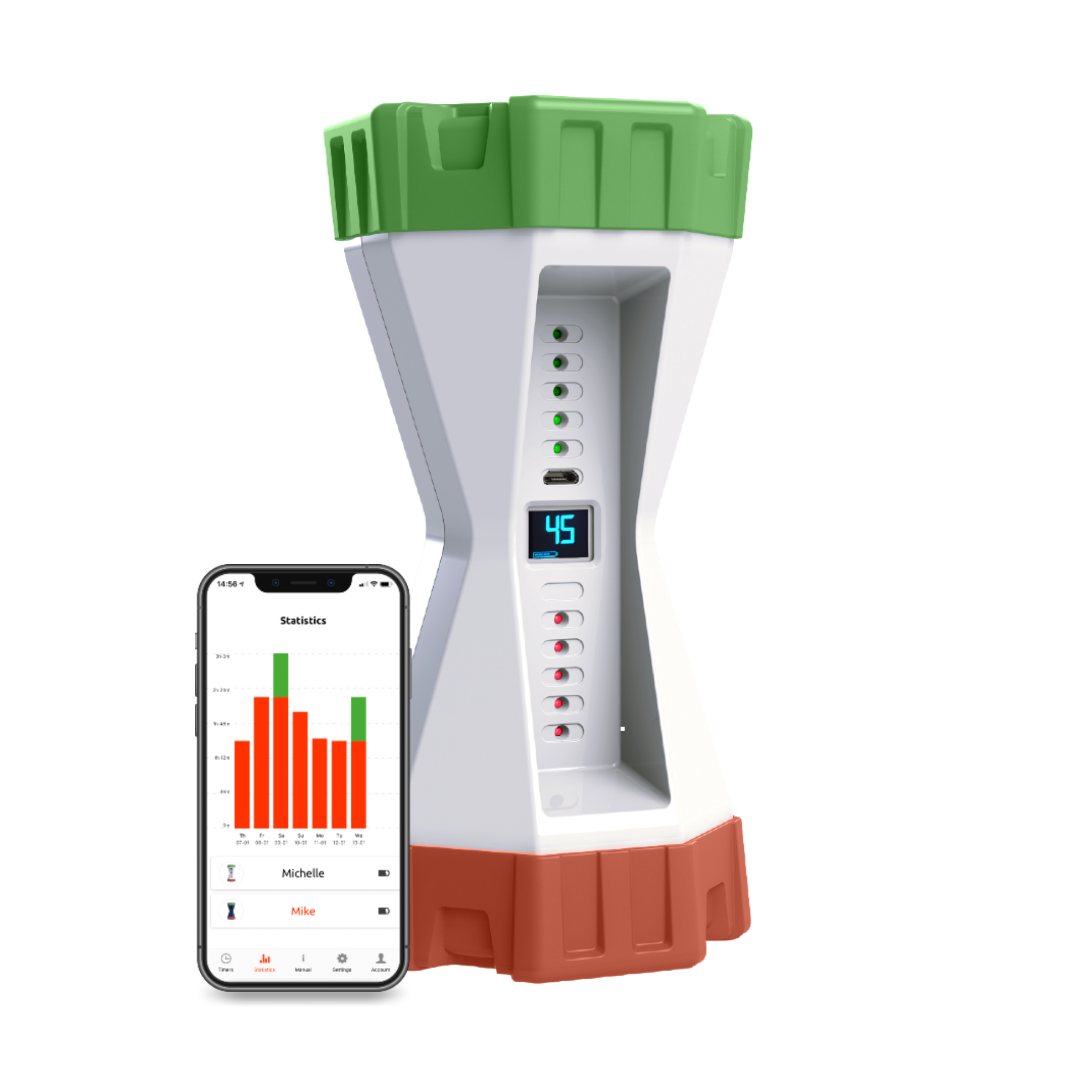
With Gametimer, your child plans their own screen time
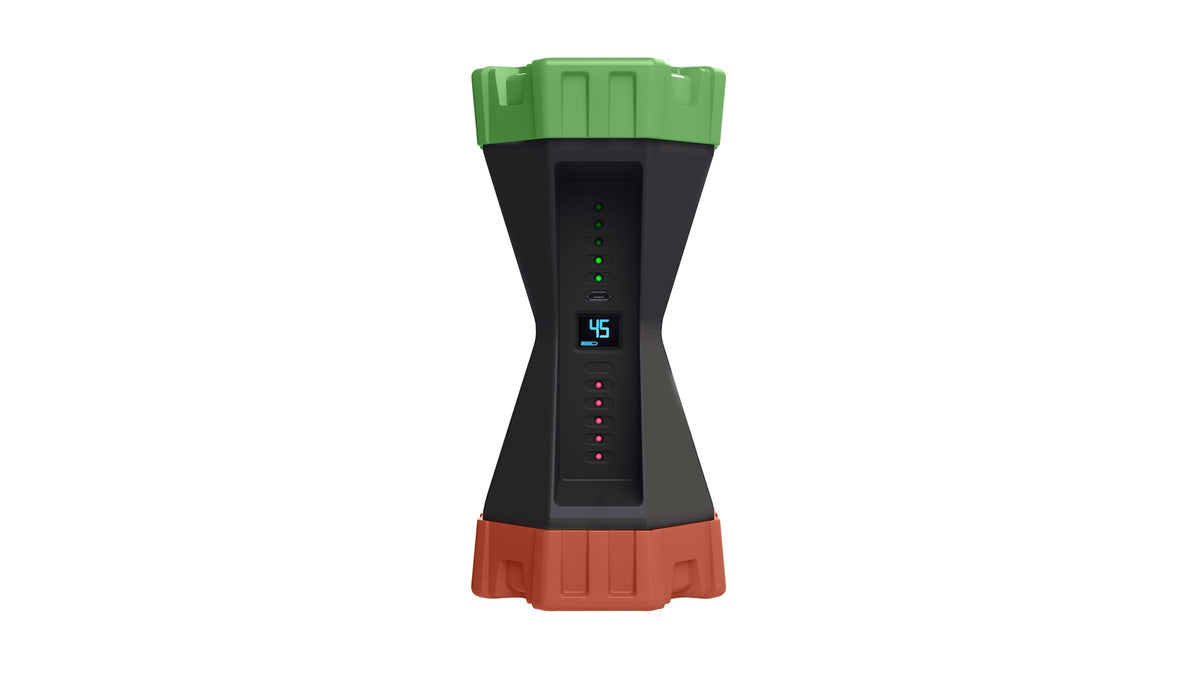
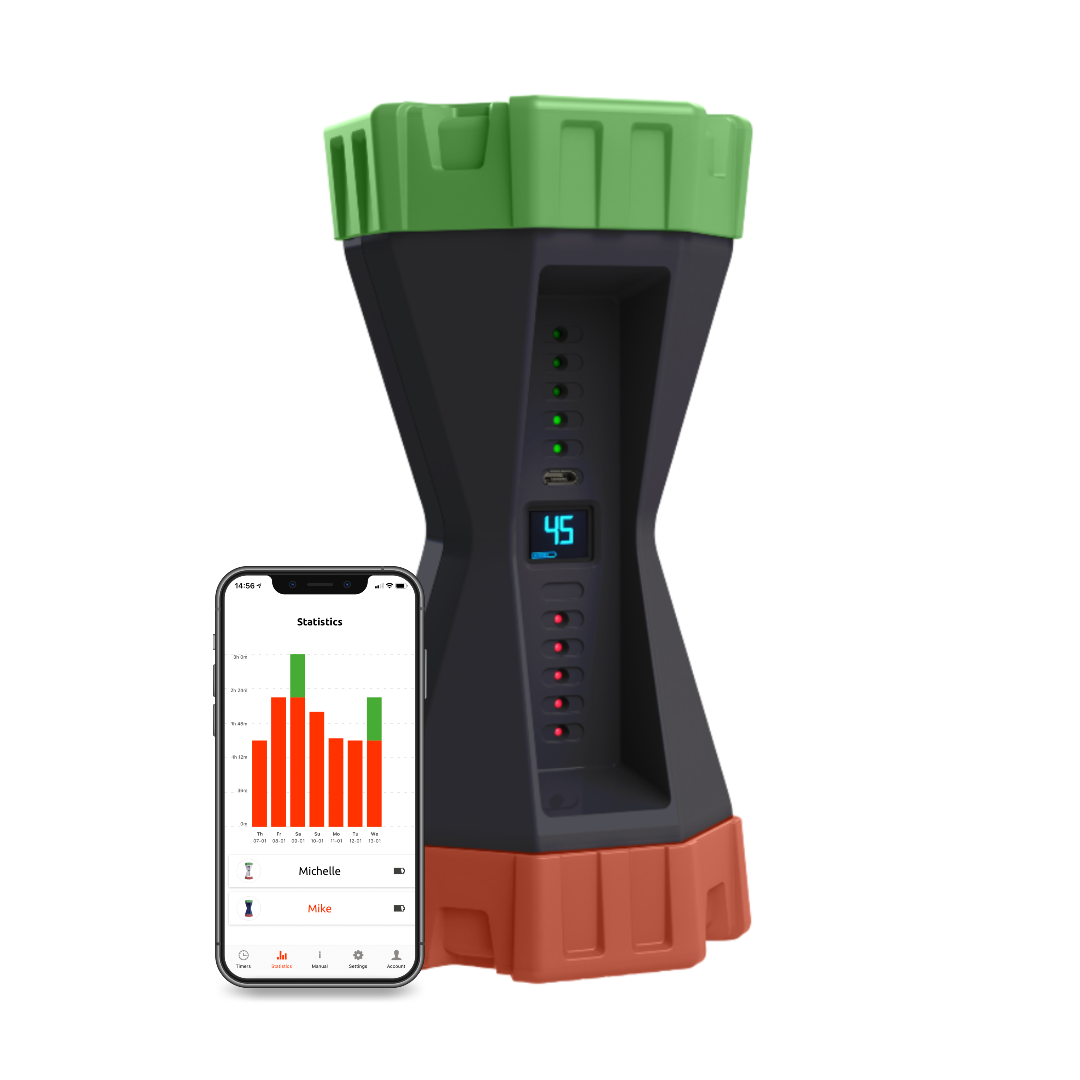
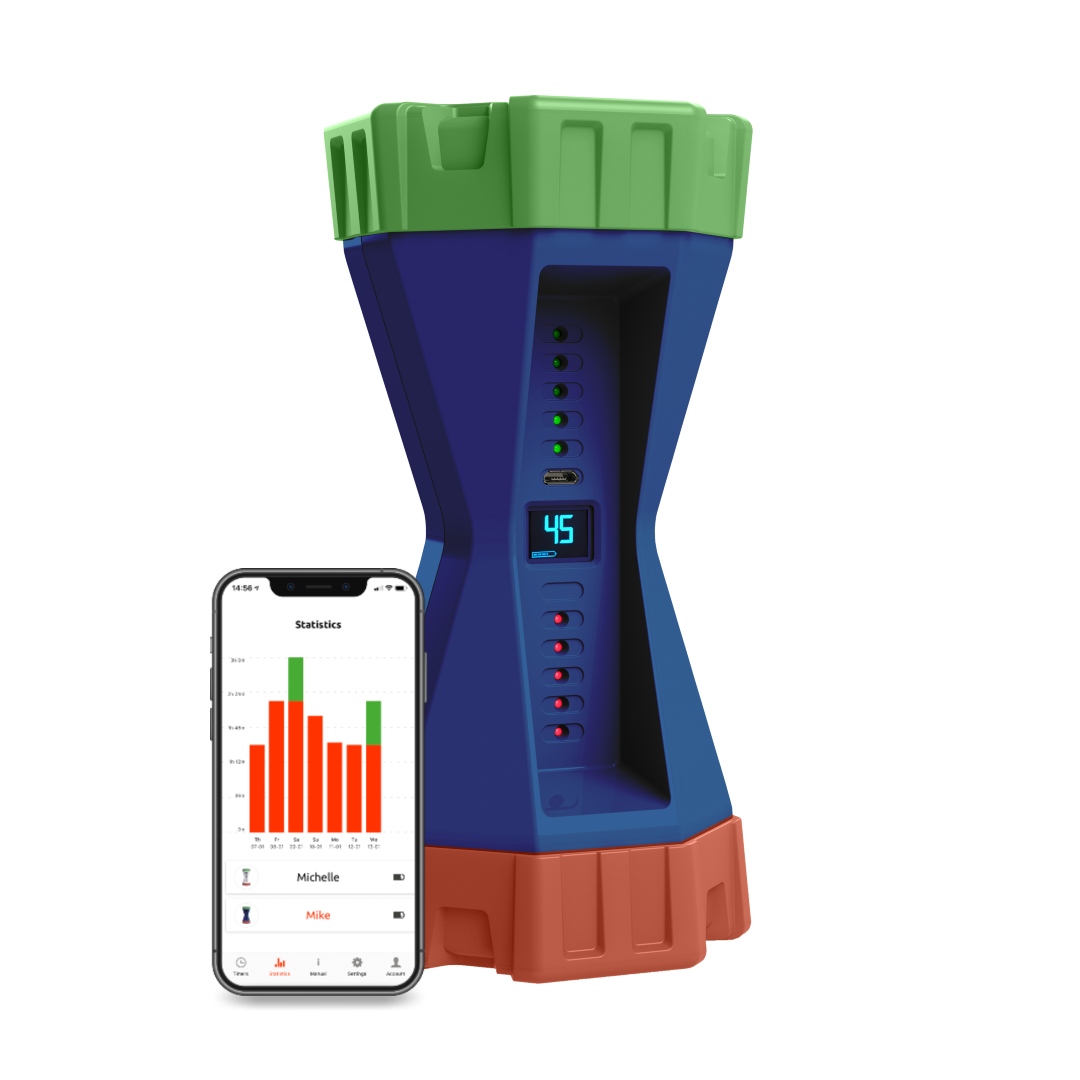
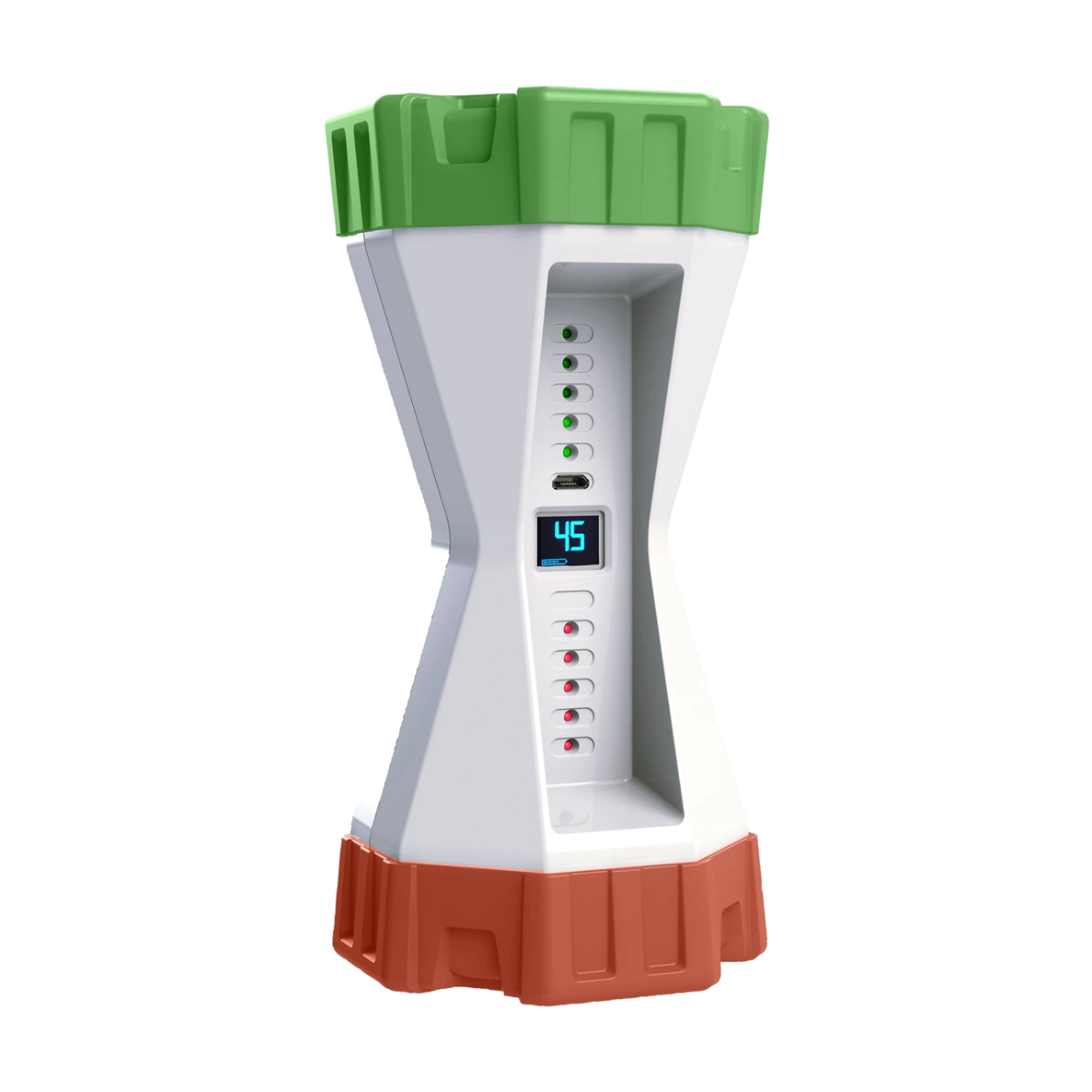
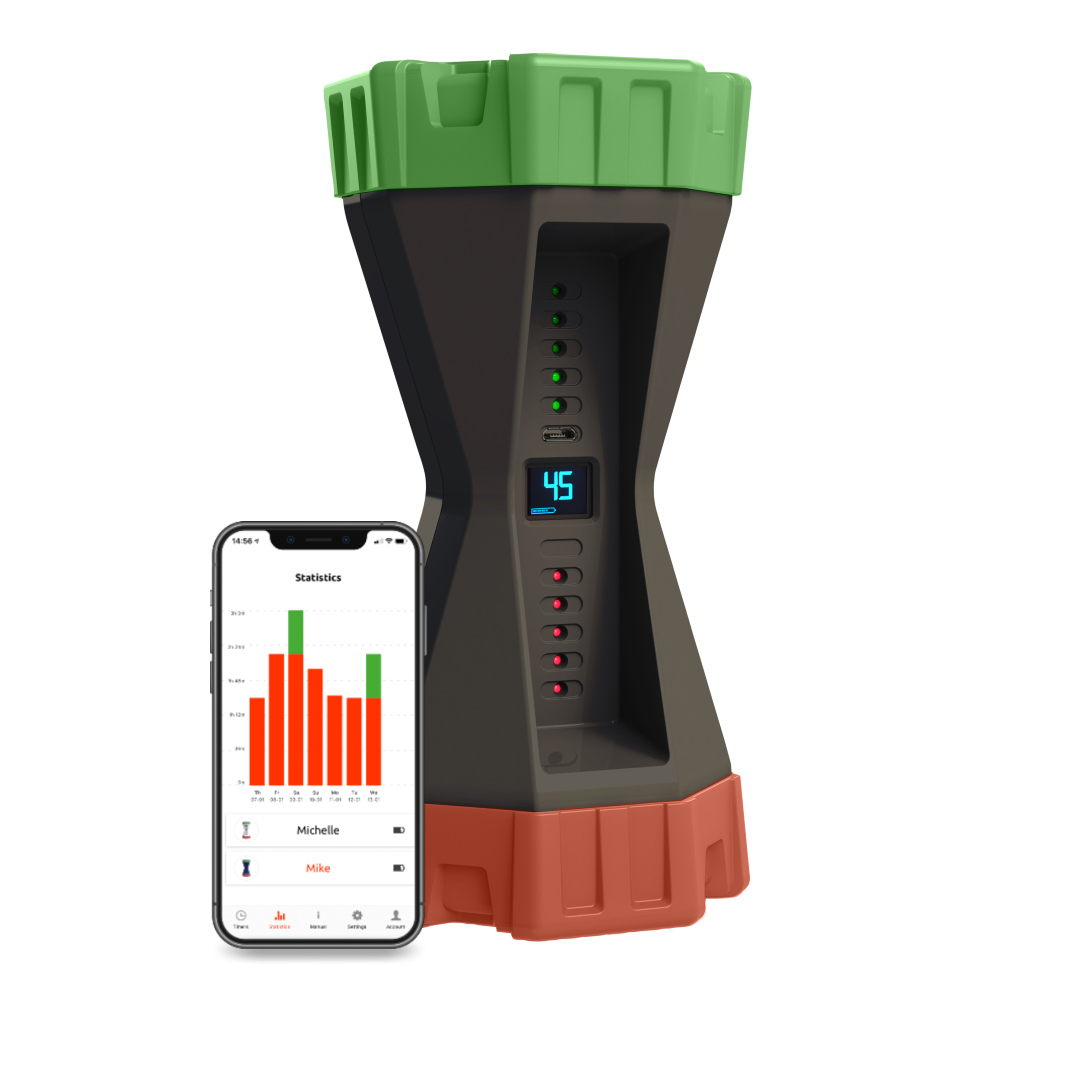
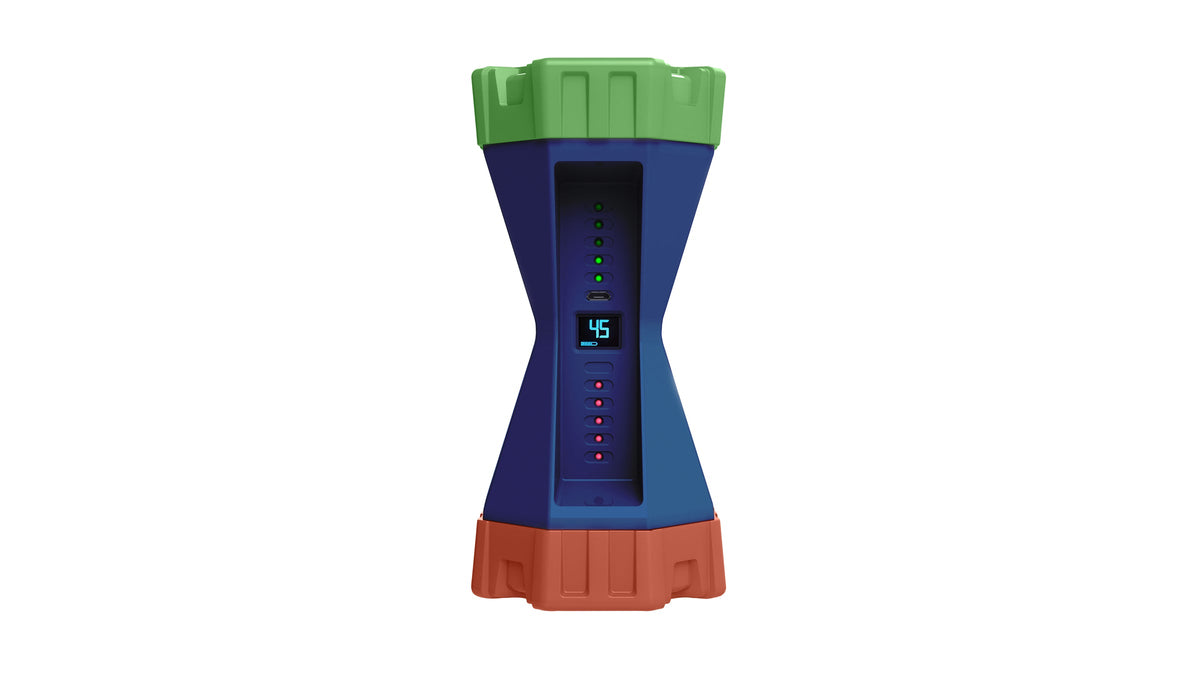
Gametimer is a timer in the shape of an hourglass that your child uses to plan their own daily screen time. It gives you a good reason to talk about screen time together. After that, your child can operate the Gametimer themselves within the time you have agreed on. Children learn by doing it themselves.
The agreement applies to all screens: phone, tablet, computer and console. With the green side up, the time starts. When the timer lies flat, the time pauses. With the red side up, the time stops. This way, your child practises starting, pausing and stopping every day. When the time is up, Gametimer gives a signal with light and sound. Gametimer deliberately does not switch off screens, so your child can finish their game properly and say goodbye to their online friends. Also read our 5 tips for agreements on screen time.
Frequently asked questions
Is 2 hours of screen time per day a lot for an 8-year-old?
According to the guideline, an hour and a half per day is the upper limit for children aged 8 to 10. Two hours is above the advice. Agree on a new screen time per day together and give your child time to get used to it.
Does watching television count as screen time?
Yes. The guideline counts all screens, so also smartphone, tablet, computer, television and games console.
Does homework on the laptop count?
Screen time at school does not count. The guideline gives no separate advice on homework. Agree at home whether you keep homework separate from free screen time.
Can my child have more screen time at the weekend?
The guideline gives a maximum per day and gives no separate advice for the weekend. You decide yourself whether you allow a bit more at the weekend. Agree on it in advance, so it is clear to everyone.
From what age can my child use social media?
The researchers behind the guideline advise not starting before the age of 13. The Dutch cabinet advises parents to wait until 15.
Sources
- Richtlijn gezond schermgebruik, guideline for parents and carers (Koning, Vossen, Brons and Van den Eijnden; Vrije Universiteit and Utrecht University, 2025)
- Rijksoverheid: "Duidelijk advies voor ouders: wacht met sociale media tot 15 jaar" (16 June 2025)
- Nederlands Jeugdinstituut: "Wat is een goede schermtijd voor mijn kind?"
- Nederlands Jeugdinstituut: "Tips: zo maak je regels en afspraken over mediagebruik"
- Trimbos-instituut: leaflet "7 dingen die je moet weten over een gezonde digitale balans bij je kind" (2026)